Dog Obedience Training: Essential Commands Every Dog Should Learn
Dog obedience is most useful when it creates safety and communication, not when it turns everyday life into a constant test. A dog does not need military precision to be well trained. It needs a small set of behaviors that work when doors open, food falls, a leash tightens, visitors arrive, another dog appears, or the dog needs to be handled by a veterinarian.
The essential skills are therefore practical: orient to name, come when called, pause, move with the handler, disengage from something dangerous, release an object, settle in one place, and tolerate routine handling. Teach each behavior first in an easy environment, then deliberately proof it around distance, duration, and distraction.
Name Response and Check-In
A name should predict orientation, not scolding. Say it once, mark the head turn, and reward. Reinforce spontaneous check-ins on walks so attention becomes voluntary and frequent.
Think of a dog's name as a request to reconnect, not as a remote-control button. Start when the dog is relaxed and the room is quiet. Say the name once in a friendly voice, mark the moment the dog turns toward you, and reward beside your leg. If nothing happens, do not repeat the name five times; reduce the distraction or briefly make a gentle sound and try again after a reset. Build a small history of success before attempting the same exercise outside. A name response is valuable precisely because it can interrupt drifting attention before the dog has fully committed to another activity.
Check-ins are slightly different: the dog chooses to look at you without hearing a cue. On a loose-leash walk, wait for one glance, mark it, and give a small reward or permission to sniff. Pay well for that voluntary connection. Over time the dog learns that watching the environment and consulting the handler can happen together. This is especially useful when a cyclist approaches, when a new person enters a room, or before you ask for a more difficult skill. Avoid turning every check-in into an order. Sometimes acknowledge the glance and let the dog return to the walk.
A useful test is whether your dog responds before you reach for the treat pouch. Practise with the food concealed, vary your own position, and occasionally reward with a toy or a chance to explore. If the name works in the kitchen but not near the dog park, that is information about distraction level, not evidence that the dog is stubborn. Move farther away from the activity and build success there before closing the distance.
Recall
Start close, reward generously, and often release the dog back to fun. Use a long line outdoors until reliability is strong. Never repeatedly call a dog into a situation where you know it will fail.
Reliable recall begins with a reason for the dog to enjoy returning. In a safe indoor area, call once, move backward a few steps, and generously reward the dog when it reaches you. Deliver several small pieces near your knees rather than tossing one behind the dog. Then release it to continue playing. This simple pattern teaches that coming back does not necessarily end the adventure. Avoid calling only before baths, nail trims, or the moment the leash goes on to leave the park.
Take recall outside on a properly fitted harness and long line in a suitable open space, never by gambling with an unleashed dog near roads or wildlife. Call before the dog becomes completely absorbed in a scent. Practise from short distances, then change one difficulty at a time: either greater distance, or more distraction, or a longer pause before reward. If the dog does not return promptly, gently manage the line, reduce the next repetition's difficulty and reward the effort; do not chase it or punish arrival. The line is a safety tool, not a means of jerking the dog toward you.
Teach a separate emergency recall cue that you use rarely and pay extraordinarily well. Rehearse it first where success is almost certain. A dependable recall is built from hundreds of ordinary, safe repetitions and careful choices about when not to test it. Even a trained dog can fail when frightened, chasing prey or overwhelmed, so physical containment remains appropriate wherever the consequences of failure would be severe.
Sit
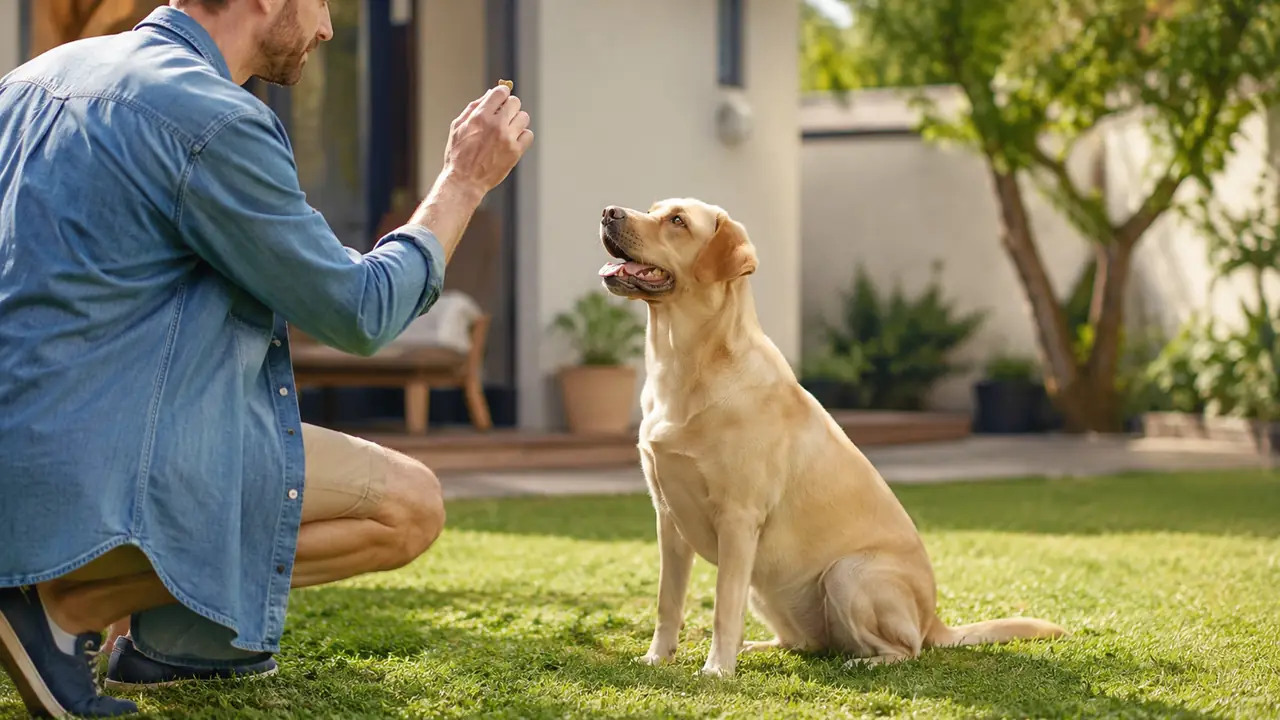
Sit is useful for greetings, doors, meals, and impulse control. Teach the position with a lure or capture, fade the lure, and avoid repeatedly pushing the dog’s rear down.
A sit is helpful when it offers the dog a clear, comfortable alternative to jumping or crowding. Start on a nonslip surface. You can capture a spontaneous sit by marking and rewarding it, or lure gently with food held near the dog's nose and moved back slightly. Do not push down on the hindquarters: forced positioning may hurt, especially in dogs with hip, knee or back discomfort. When the movement is fluent, practise the same hand signal without food in that hand, then add the verbal cue just before the signal. Reward the sitting posture, not the dog's frantic attempt to follow visible food.
The practical skill is not merely touching the floor with the dog's rear; it is knowing when sitting will help. For greetings, begin with one calm person at a distance and reward the dog for keeping four feet stable or choosing to sit. Ask the visitor to pause when the dog jumps, and resume attention after a calm reset. For a food bowl, reward a brief composed pause rather than demanding a prolonged sit from an excited puppy. For dogs with orthopedic disease, a stand or hand target can serve the same household purpose.
Proofing needs care. Sitting perfectly in an empty room does not guarantee the skill amid delivery sounds and children. Increase duration in small increments before adding movement, then teach it in new rooms and eventually quiet outdoor settings. If the dog repeatedly breaks position, shorten the required hold. A comfortable, predictable cue is more useful than a theatrical pose held through visible anxiety.
Down
Down supports settle and longer stationary behavior. Some dogs dislike lying down on cold, hard, or slippery surfaces, so change the surface before assuming stubbornness.
Down can become a resting cue rather than a posture the dog performs reluctantly. Choose a warm, non-slip mat. Reward naturally offered downs or use a gentle lure toward the floor without pressing on the shoulders. Mark the moment elbows and chest settle and feed low between the forepaws. Some breeds and individual dogs fold into a down differently; what matters is comfort and understanding, not a perfectly symmetrical shape. A dog that refuses only on hard surfaces may be telling you something about footing, temperature or pain.
Build a voluntary down in an easy location, then start rewarding calm signs: a softer body, slow breathing and the choice to remain for another moment. Separate a short obedience down from the broader skill of relaxing. An excited adolescent can lie down while still scanning for the next event; a settled dog is actually becoming more comfortable. If a dog stiffens or anxiously waits to be released, shorten the task and add quiet breaks. Avoid pushing a dog into a down in the presence of a trigger that makes it feel unsafe.
Use down when it helps with ordinary life, such as waiting while food is prepared or settling beside a café table where dogs are welcome. Do not rely on it to control a dog near an aggressive animal or in a crowded unsafe passage. Distance and thoughtful management take priority. Older dogs, dogs recovering from surgery and dogs with joint problems may need a different position altogether, selected with their veterinarian.
Stay
Build duration in seconds, then small distance, then mild distraction. Return to reward the dog often so “stay” does not always end with the handler walking far away.
Stay combines several distinct skills: maintaining a position, coping with a person moving away and ignoring competing events. Train each separately. Ask for a comfortable sit, down or stand, count just one second, reward in position and give a clear release cue. Repeat until the dog appears relaxed before adding two or three seconds. Next practise a single sideways step while keeping the duration short. Only after both are reliable should you introduce a light distraction such as a person walking past at a distance.
Many failures happen because the handler increases duration, distance and distraction in the same repetition. A dog that can remain while you walk three meters away in the living room may not yet stay when a friend opens the refrigerator. Write down the last easy success; if two repetitions fail, go back to it. Reward at the place you asked the dog to remain so the dog does not learn that breaking position is the fastest route to food. Deliver the release cue consistently so the finish is obvious.
There is an important welfare limit: never use a stay to leave a dog restrained beside a frightening stimulus. The dog should not have to choose between obeying and feeling safe. For medical handling, teach voluntary cooperative-care positions instead of forcing a stationary hold. Stay is successful when a dog understands the rules and has the capacity to succeed, not when it freezes under pressure.
Wait
Wait is a practical pause rather than a formal stay: at doors, curbs, car exits, and food bowls. Release clearly so the dog learns that waiting has an endpoint.
Wait means pause until permission is given. That makes it useful at a doorway, before stepping out of a vehicle and beside a curb. Unlike a formal stay, it often lasts only a second or two. Close the door before the dog rushes through, wait for a moment of stillness, then open it slightly. If the dog surges, close it gently without trapping the dog, reset and reward the pause. Add a distinct release word and practise in controlled spaces before using it at an open exterior door.
Car exits deserve a separate lesson because excitement and traffic make the consequences real. Keep the leash secured, open the door only far enough for safe control, cue a brief wait and release the dog after checking the surroundings. For energetic puppies, several small rehearsals in a parked car are more useful than expecting a flawless pause on the first busy outing. A household can apply exactly the same rule to food bowls: brief composure, release, eat. Do not turn meals into repeated tests of patience or take the bowl away to assert control.
Wait supplements physical safety; it does not replace leash handling, doors or gates. If a startled dog bolts, trained impulse control may disappear. Use predictable equipment, especially around elevators, busy streets or children carrying food. The aim is a small, understandable pause that reduces accidental rushing—not a prolonged confrontation about who is in charge.
Leave It
Teach disengagement from a low-value item and reward with something better. Progress to food on the floor, then outdoor distractions while using a leash for safety.
Teach leave it with something easy enough to resist. Place a low-value treat in a closed hand, wait quietly for the dog to stop mouthing or pawing, mark disengagement, then reward from the other hand. Later practise with an item on the floor protected by your hand or foot. Gradually ask for a glance toward you after noticing the item. The reward should make moving away worthwhile. Repeatedly saying the cue while the dog is already swallowing the object teaches very little; intervene physically and safely when ingestion risk is immediate.
At home this skill helps with dropped food, socks and unattended children's toys, but not every item is a training opportunity. Medication, chocolate, grapes and unknown substances call for prevention and urgent veterinary advice if exposure occurs, not an attempt to proof obedience around a hazard. Outdoors, begin far enough from a distraction that the dog can actually choose to disengage. Mark the first look away, turn with the dog and reward movement toward a safer direction. The environment becomes more manageable when the dog has a rehearsed exit.
Do not punish curiosity. Sniffing objects is normal canine behavior, and a leave-it lesson is about choosing an alternative in particular contexts. Offer safe sniffing and exploration at other times. Dogs who guard objects need a carefully managed trade protocol and professional assistance rather than coercive leave-it demands. A calm, consistent skill can protect the dog without making exploration itself frightening.
Drop It
Trade rather than pry. Reward release of a safe toy and often give the toy back. This prevents “drop” from predicting permanent loss and reduces conflict around stolen objects.
Drop it asks for a voluntary release of something already in the dog's mouth. Begin with a familiar, low-stakes toy. Offer a desirable treat near the nose, mark when the dog opens its mouth, give the treat, then often return the toy. Returning it matters: dogs who learn that releasing an item always means losing it may clamp down, run away or guard more intensely. Once the exchange is easy, say the cue just before presenting the reward, gradually fading the visible food without abandoning reinforcement.
Build the skill in short games of tug where the toy pauses, the dog releases and the game starts again. Keep tug rules relaxed and safe for the dog's teeth and body. Teach family members not to chase a dog that has stolen a sock; pursuit can turn theft into an exciting game. Instead, create distance from the dangerous item, offer a practiced trade and secure the object once released. If a dog stiffens, growls or snaps around possessions, avoid reaching into its mouth or forcibly removing food. That is a safety and behavior case, not merely poor obedience.
There are times to contact a veterinarian immediately, especially if a toxic substance, sharp item or long piece of string is swallowed. Training improves prevention but cannot reverse ingestion. Keep high-value hazards out of reach, supervise appropriate chews and practise release with safe items before real-life problems occur. A reliable drop it feels like cooperation, not a wrestling match.
Loose-Leash Walking
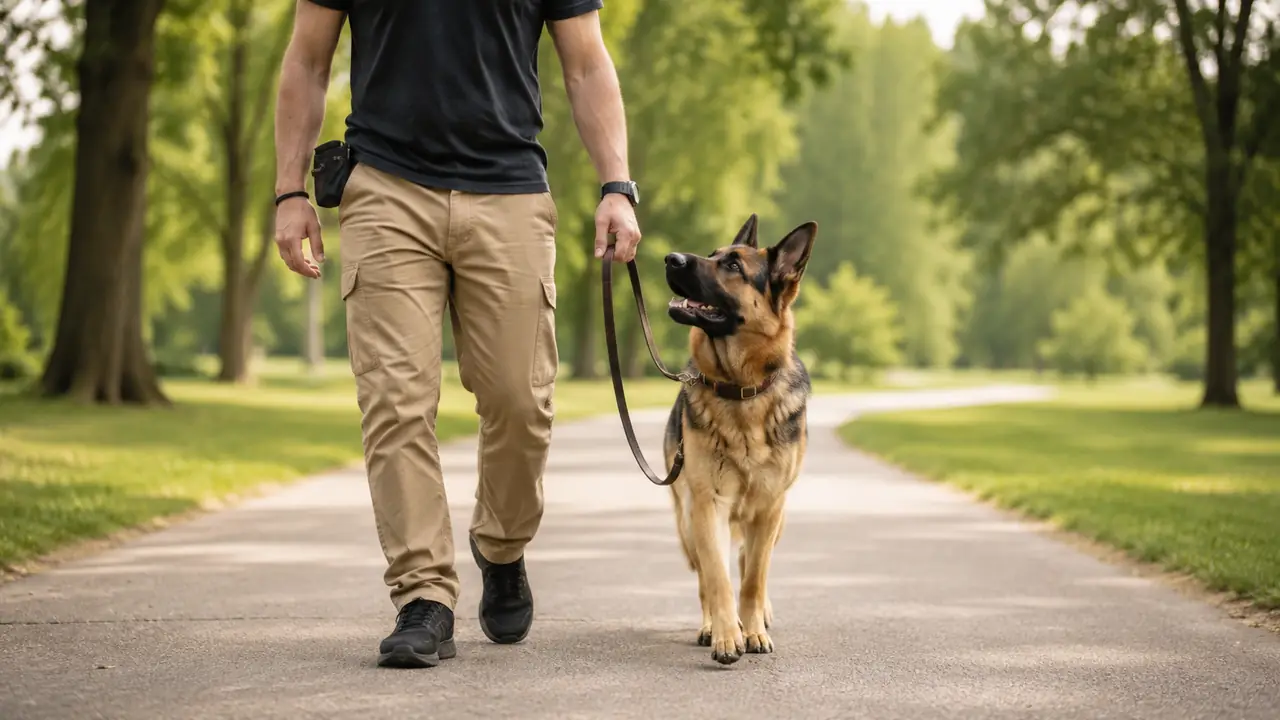
Reward position before the leash becomes tight, stop or redirect when pulling begins, and build sections gradually. Let sniffing function as a reward instead of expecting a competition heel for an entire walk.
Choose a comfortable harness and a leash that permits ordinary movement without constant tension. Begin where the dog can succeed: a hallway, driveway or quiet sidewalk. Mark and reward a few steps of slack leash beside you. If the dog reaches the end, pause or change direction gently rather than snapping the leash. As soon as slack returns, move forward and reward again. The precise heel position used in formal sports is optional; for daily walks, the useful criterion is a relaxed leash and safe coexistence with the surroundings.
Scent is a powerful reward. Teach a cue such as “go sniff” to release the dog toward a tree after several loose steps. That turns environmental exploration into part of the lesson instead of treating every interesting smell as competition. Start walks after the dog has had an opportunity to toilet. Use a predictable route to practise new mechanics, then change one difficulty at a time. On a crowded street where the dog is repeatedly overwhelmed, more drill repetitions are unlikely to help; choose more space or an easier route.
Keep the dog's physical comfort in mind. Equipment should not rub or restrict normal shoulder motion, and walks should fit age, weather, health and fitness. A dog with respiratory distress or pain needs veterinary assessment rather than stricter leash rules. Measure progress in short successful stretches and faster recovery from distractions, not by whether the dog stays glued to your knee for an entire outing.
Place or Mat
Teach the dog to go to a bed or mat and relax. Place is useful for visitors, cooking, meals, children’s activity, and helping excitable dogs practice an off-switch.
A portable mat can become a predictable invitation to rest. Put the mat on the floor, mark any glance or step toward it, and reward on the mat. Wait for the dog to offer four paws on it, then a sit or down if comfortable. Start with very short moments; release before the dog becomes frustrated. As the pattern develops, reward calm choices such as lying on one hip or resting the head. Do not keep repeating “place” while pointing at the bed. Arrange the exercise so the destination is easy to recognize and the dog can volunteer.
Use the skill in ordinary situations: when someone cooks, when visitors are expected or during a quiet meal. For houseguests, practise the mat response before the doorbell rings. When real visitors arrive, manage distance and barriers as needed and let the dog settle where it can observe without being mobbed. Give a chew or scatter a few treats on the mat if that helps, and do not invite strangers to touch a dog simply because it is lying quietly. The mat should remain a safe place rather than a station from which the dog must tolerate unwanted contact.
Take the mat to a new room or a quiet outdoor setting, and initially lower your expectations because the environment has changed. Never treat place as a substitute for managing severe separation anxiety, panic or aggression. It is one component of a calm routine, built gradually and reinforced generously. The dog's willingness to return to the mat voluntarily is an important measure of whether the lesson is truly comfortable.
Emergency Stop or Down
An emergency cue can interrupt movement before a road, animal, or hazard. Build it separately with high-value reinforcement and do not dilute it through casual repetition.
An emergency stop must be conditioned under unusually favorable circumstances before it is needed in a dangerous one. Select a short cue that is not already overused. At first, ask for a simple halt or down from a walking pace in an enclosed area, immediately mark and deliver an exceptional reward. Repeat only a few times per session. Begin to practise while moving slowly, then at modest distance, always keeping the setup safe. The goal is an automatic, positively reinforced response—not a dog that freezes because the handler shouts.
Decide whether stop, down or recall is the better emergency behavior for your dog. A dog running toward a roadway might be safer returning to you in some contexts, but a stay-in-place response may be advantageous when approaching it would be risky. Train both separately if you intend to use both, and never assume either is reliable amid panic, prey pursuit or a loud unexpected sound. Use fences, secured leashes and sensible environment choices as the primary safety measures. Practise your own response as well: where will you move, what cue will you give, and how will you secure the dog afterward?
Avoid “testing” the skill by creating real danger. You cannot safely rehearse it next to moving traffic or uncontrolled dogs. Measure proficiency in controlled training setups with gradually changed distances and distractions, and refresh the cue periodically with high-value rewards. A good emergency cue is an extra safety layer, never a license to take risks.
Cooperative Handling
Train chin rest, paw presentation, collar touch, ear checks, and calm positioning. Husbandry skills are obedience in the most practical sense because they make medical and grooming care safer.
Cooperative care makes routine tasks less frightening by giving the dog predictable steps and genuine opportunities to pause. A chin rest in the palm, for example, can mean “I am ready for you to check my ears.” Reward the dog for placing its chin voluntarily, touch the shoulder briefly, reward again and stop while the dog is still relaxed. Over sessions you can work toward inspecting the ears, lifting a paw or clipping a harness. If the dog lifts its chin or turns away, end that repetition and make the next one easier. Consent cues improve communication; they are not a guarantee that a painful procedure can always be done without restraint.
Split grooming into tiny pieces. Before trimming nails, practise seeing the clippers, hearing them operate at a distance, a gentle paw touch and contact with an untrimmed nail. Rewards should follow small successes. Nails, teeth, eyes and ears require appropriate technique; if you are unsure how to do a procedure safely, ask a veterinarian or qualified groomer to demonstrate. Dogs with a history of painful handling may need professional behavior support and, sometimes, veterinary medication for necessary care. Respecting that history is practical, not indulgent.
Keep cooperative care separate from surprise restraint. Tell the dog what will happen through consistent cues, prepare all materials beforehand and stop before fear escalates. The long-term outcome is not just compliance at one appointment; it is a dog that can participate in essential care with as little avoidable stress as possible.
Common Mistakes to Avoid
- Teaching cues only in one room
- Repeating commands
- Calling the dog only to end fun
- Using stay before building duration
- Prying objects from the mouth
- Expecting a perfect heel for an entire walk
- Skipping handling skills
The most common obedience mistake is confusing a familiar word with a mastered skill. A dog can understand “sit” in the kitchen and genuinely not know what to do at an outdoor market. Dogs learn in contexts, so change locations progressively, reinforce early success and avoid accusing the dog of defiance. Another mistake is giving several cues in quick succession: “sit, sit, sit, sit.” That can teach the dog to wait until the fourth repetition. Say the cue once, pause, and if needed arrange an easier repetition before trying again.
Owners also accidentally reward the wrong moment. If the dog sits, then jumps up and only then receives a treat, the jump may be what earned the reward. Mark the correct movement promptly and deliver the treat in a position that supports the behavior. Plan when the dog will be released from a stay or mat; without a clear finish, the dog may make its own rules. A reward is not a bribe simply because it is food, but a treat continuously waved in front of the nose can become a crutch unless the lure is faded.
Finally, notice when the training plan ignores welfare. A dog with pain, panic or extreme fatigue cannot learn well through repetition and pressure. Punishing growls, forcing contact with a frightening person, or using harsh equipment can make safety worse. Begin with management and easy successes; for significant aggression or fear, coordinate veterinary care with a qualified reward-based professional.
A Practical Decision Checklist
- Name gets orientation
- Recall practiced on long line
- Wait used at doors
- Leave/drop trained with trades
- Loose leash reinforced before pulling
- Mat settle established
- Handling practiced
- Skills proofed gradually
Before the next session, answer five plain questions: What exact behavior am I teaching? Under what conditions does the dog already succeed? What reward does this dog value in this situation? How will I prevent a mistake that could be dangerous? And what would tell me the exercise is too difficult? If you cannot answer, simplify the setup. For recall this might mean a long line in a quiet field. For visitors it might mean a gate and a mat. For handling it might mean only touching the collar for a moment rather than finishing the entire task today.
A practical weekly plan is to select two priority behaviors and schedule a few short repetitions during routines that already happen. Name response can be rewarded during walks; wait can be practised before a door opens; drop it can become part of a game. Track success rather than counting commands shouted. Write down a rough measure such as “returned on first cue in four of five easy rehearsals.” Once success is consistent, add one small challenge. If performance collapses, go back to the last reliable version.
Check comfort and safety alongside accuracy. Is the equipment well fitted? Does the dog offer to participate? Are household members using the same cue and release word? Has a medical problem appeared or the dog's tolerance changed? Training plans work best when they can be adjusted without guilt. The point is reliable everyday cooperation, not an impressive checklist of tricks.
Frequently Asked Questions
How many commands does a dog need? A handful of reliable safety and household behaviors is more valuable than dozens of unreliable cues.
How long should a session last? There is no ideal clock length for every dog. Five minutes can be too long for a frightened puppy and too short for an eager adult. Stop while the dog still wants to participate, and break a difficult lesson into several tiny sessions. Quality and clarity matter more than repetition count. Should I train before meals? Mild hunger can make food interesting, but a hungry, frustrated or nauseated dog may struggle. Work when the dog feels comfortable and motivated.
Do older dogs learn obedience? Yes. You may need to account for hearing, vision, joint pain and established habits, but learning continues across life. What if my dog knows the cue and ignores it outside? Return to an easier location, increase distance from distractions and reward generously. Treat the failure as feedback about the setup. Can praise replace food? Sometimes, if the dog genuinely values it; many dogs find sniffing, access to play, toys or food more rewarding than praise in a difficult setting.
When should I find a trainer? Look for qualified, reward-based help when you are stuck, or early when a behavior poses a safety concern. Ask what methods will be used, how progress is measured, and how the professional responds when a dog shows fear. If aggression, substantial fear, sudden behavior changes or pain are involved, consult a veterinarian and ask about a veterinary behavior specialist. Training advice should improve both safety and the dog's well-being.
The Bottom Line
Obedience is a safety toolkit. Teach a small number of useful behaviors clearly, reward them well, and proof them in the real environments where they matter. Reliability comes from gradual practice, not from saying a cue louder when the dog has never learned it at that level of distraction.
Good obedience is a collection of small, well-rehearsed safety and communication skills. You do not need a dog that performs twenty commands on demand. A dog that checks in, comes back in safe practice, walks on a relaxed leash, pauses at doors and cooperates with handling already has an extraordinarily useful toolkit. The strongest skills are taught in calm conditions, reinforced fairly and gradually transferred into real settings where distractions are meaningful.
Keep physical safety in place even as training improves. Secure doors and fences, use a leash near traffic and give fearful dogs space. When a cue stops working, ask what changed: the surface, the reward, the noise level, the dog's health or the difficulty. Adjust the next lesson instead of escalating force. Humane training builds habits that make ordinary life better for the dog and the people who live with it. That is a more durable success than momentary compliance obtained through fear.
Additional evidence and further reading (these references do not imply veterinary review): American Veterinary Society of Animal Behavior — Humane Dog Training Position Statement (2021) | AAHA — Nutrition and Weight Management Guidelines (2021)